Loading...
Vertical AI platform for medicine
Specialty AI, built on the one layer every department shares.
Layer 2: support AI for skin, wounds, and the next specialty. Layer 1: common infrastructure that structures conversation, records, and review.
Every clinic needs the same clinical conversation, records, and review. We lay that common layer first, then add specialty AI only where clinical validation is underway.
AetherHeal Global · Information and communication · Ulsan
Product lineup · Current status
Platform structure
Common infrastructure below, specialty AI above
New specialty AI enters the same review flow, where the physician still confirms and decides.
Layer 2 · Vertical specialty AISpecialty modules added only where clinical validation and reviewers exist
Clinical validation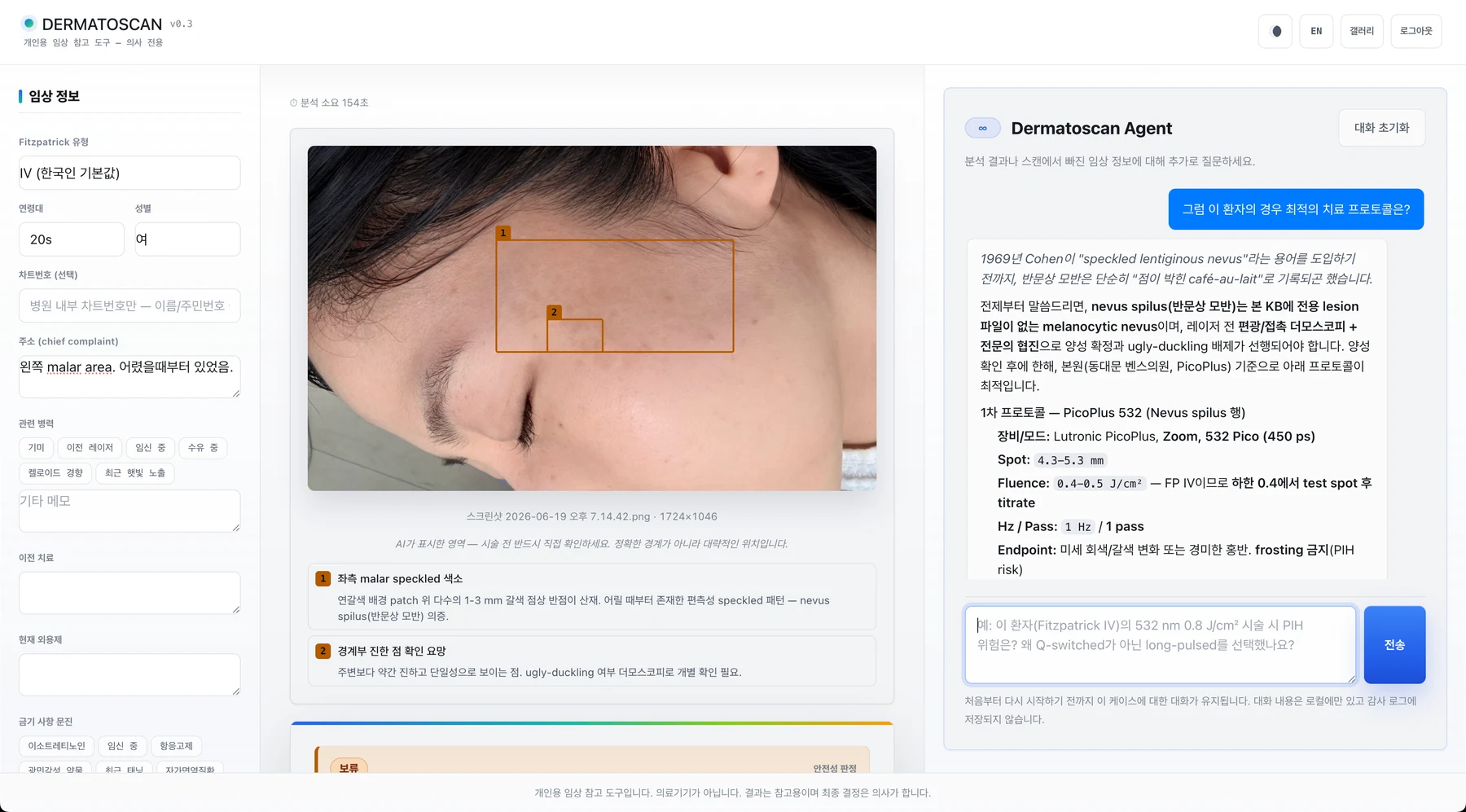 Co-development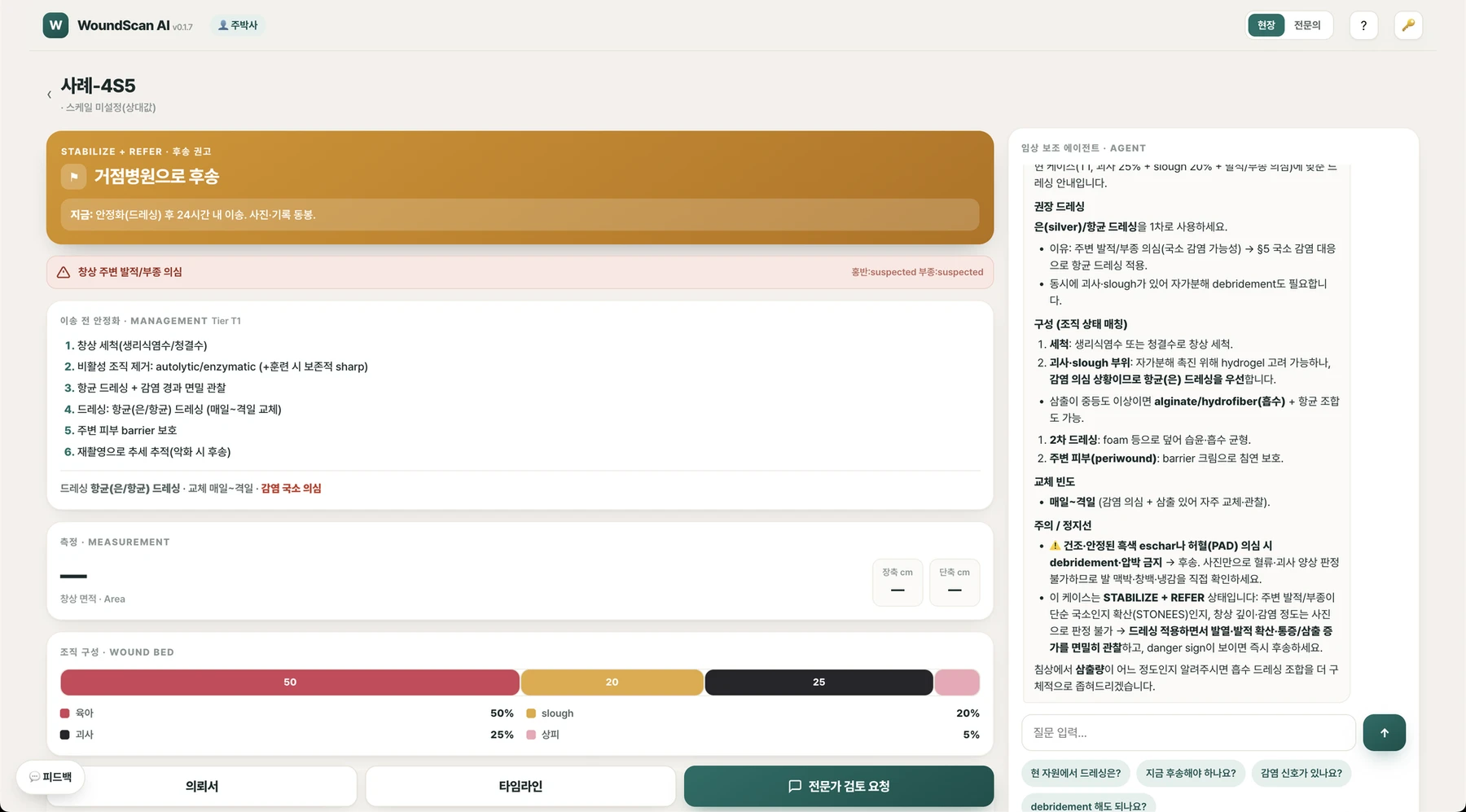
DermatoScan AI
Organizes imaging and device inputs for pigmented-lesion assessment. Validation scope is expanding from more than 50 early cases.
Learn more
WoundScan AI
An R&D project for wound image quantification and progress documentation, with scope and review criteria designed with clinical advisors.
Learn more
Layer 1 · Horizontal clinical infrastructureConversation, documentation, review, and follow-up across outpatient care
Beta · field validation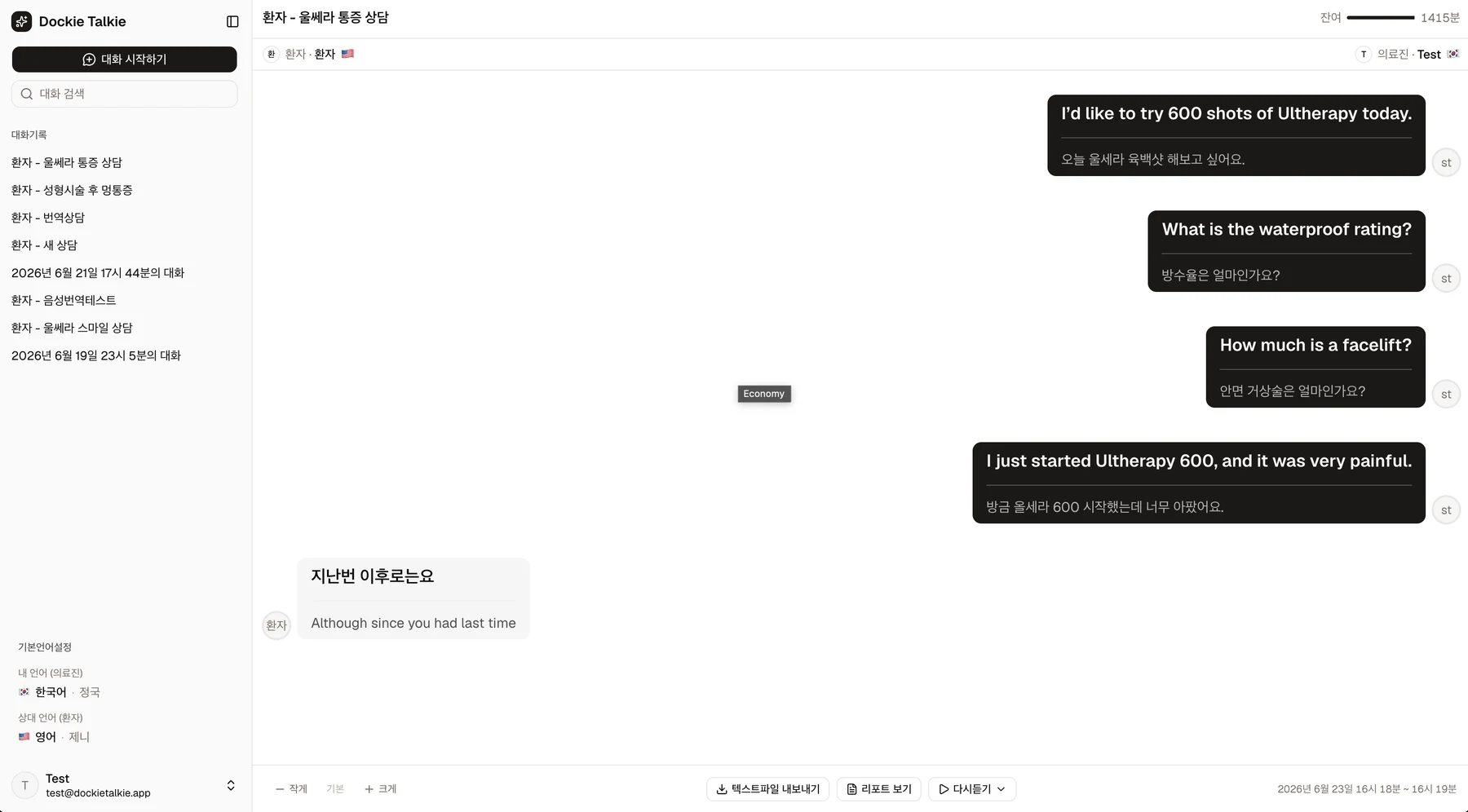 R&D
R&D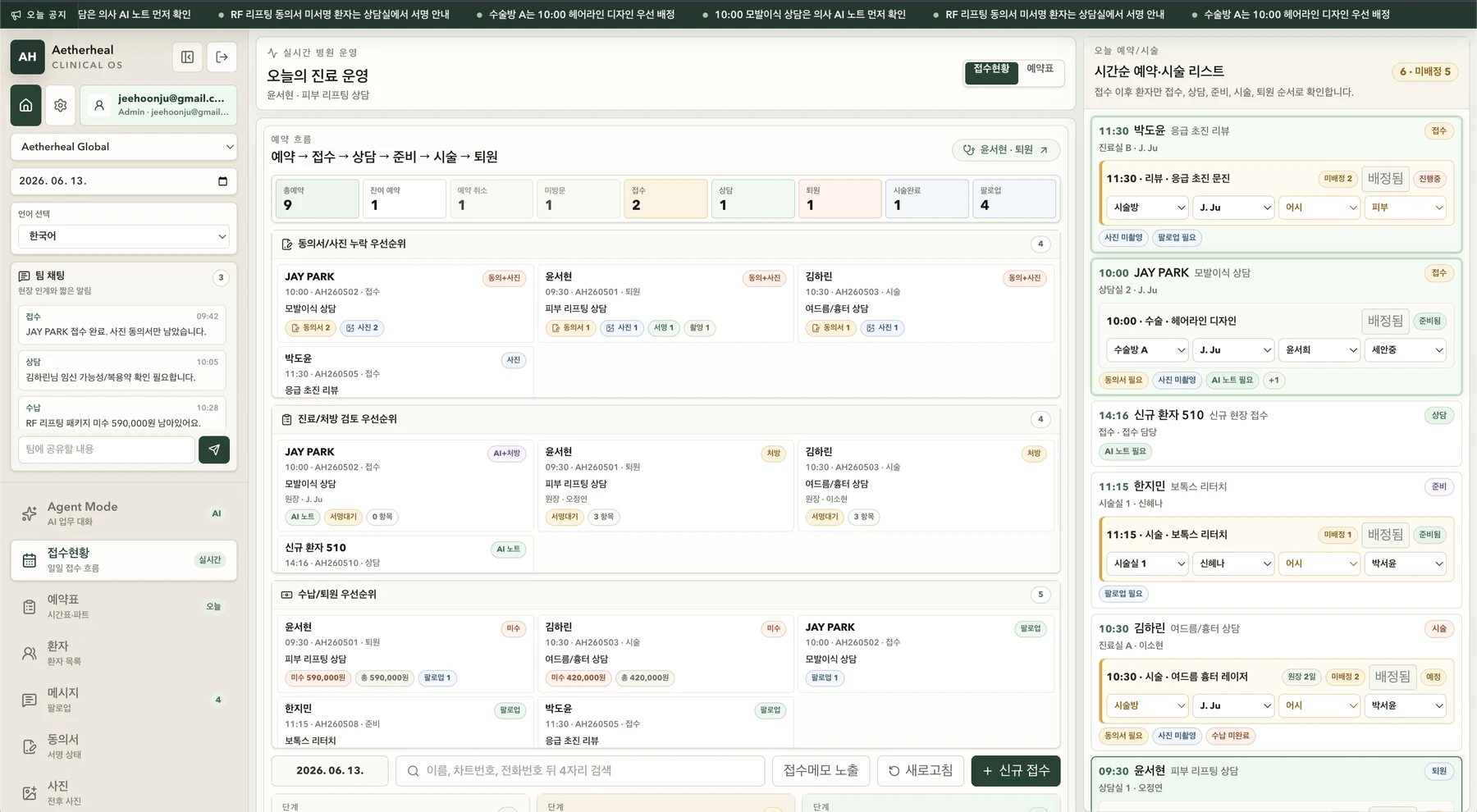
Dockie-talkie
Interprets conversations between clinicians and international patients in real time, lowering the language barrier inside the consultation room. It helps physicians extend their practice across more languages and become truly global clinicians.
Learn more
Clinical Copilot
A shared assistance layer that surfaces information and evidence for clinician review. Real reasoning screens and review loops are already in development, improving through clinician feedback and an agentic development loop.
Learn more
Layer 0 · Clinical OSThe operating base for every encounter: booking, reception, consult, billing, records
The foundation every specialty AI builds on. It threads booking, reception, consult, billing, and records into one flow, and interpretation, reasoning, and specialty AI share that record.
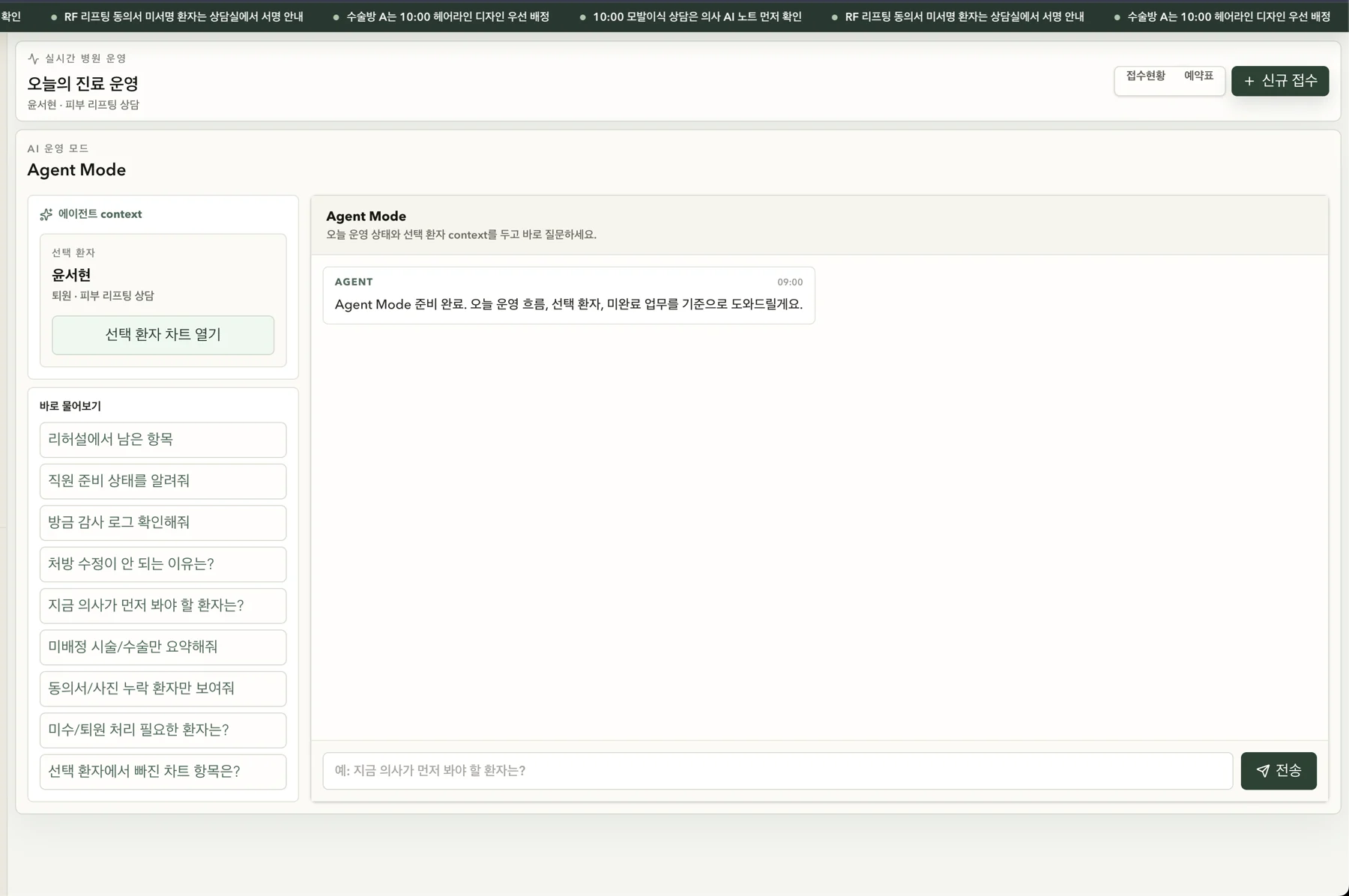
Agent Mode
Ask the AI about today's operations and the selected patient's context
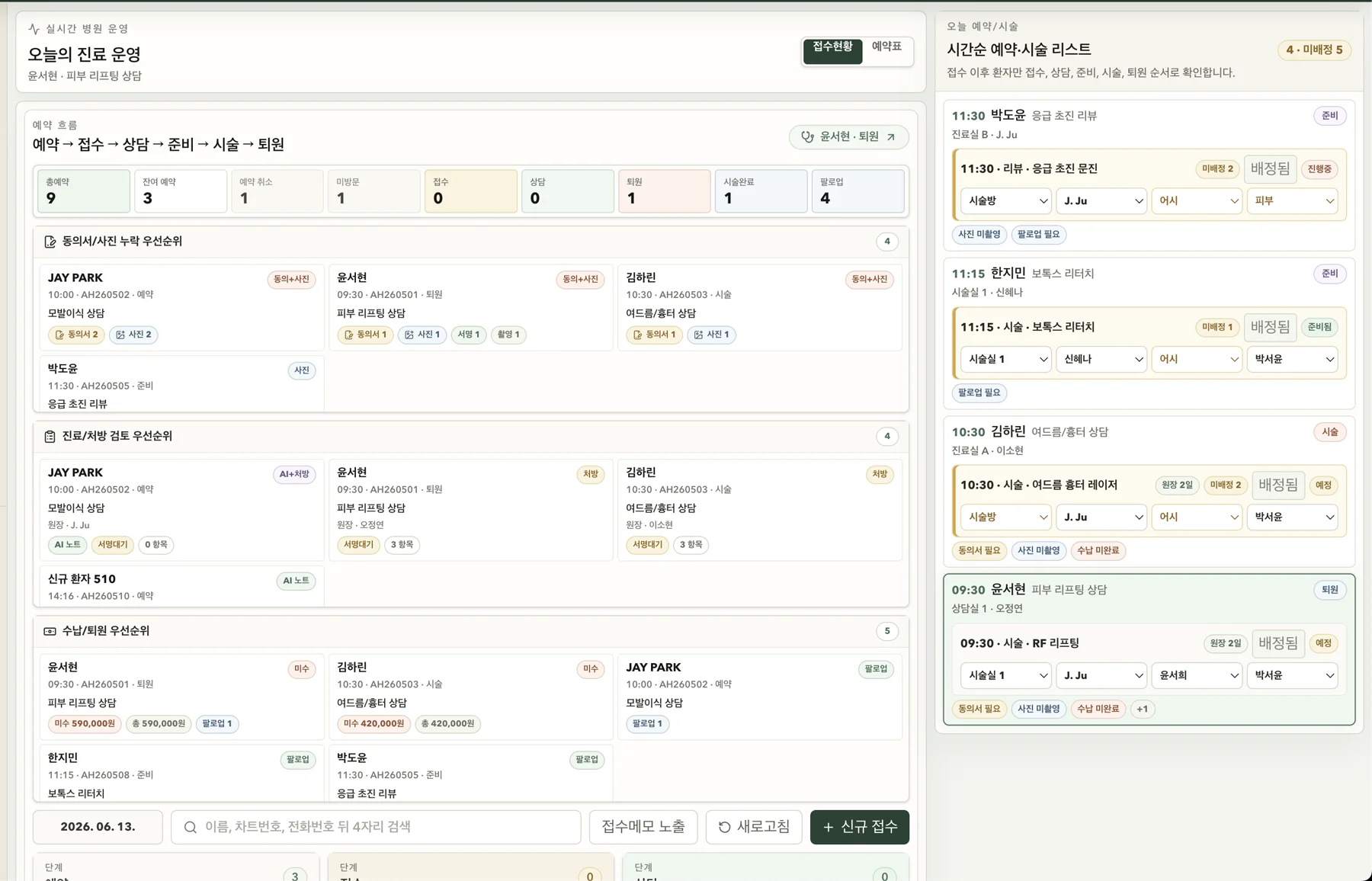
Real-time operations board
Booking to discharge in one view
Want to see firsthand how AI assists physicians in real practice?
Contact usWhy this structure
The order creates the depth
We lay the common infrastructure first, then add specialties we have validated ourselves, and open the same validation method to outside developers as a standard. The depth comes from that order; skip a step and you lose it.
01
1. Lay the common infrastructure once
Interpretation (Dockie-talkie) and clinical reasoning (Clinical Copilot) are needed in every outpatient clinic, whatever the specialty. Build them once as shared infrastructure instead of rebuilding them per specialty, and every specialty AI above reuses the same base. A single-specialty product cannot produce that shared asset, and it is the floor the whole platform stands on.
02
2. Add specialty AI we have validated ourselves
We ran DermatoScan AI in validation directly in clinical practice and refined the selection criteria for 11 lesion types and 11 laser/energy devices. What separates this from a desk demo is a first validated case that holds up in real care. One proven specialty sets the bar for the next (WoundScan AI) and for outside developers.
03
3. Open the validation method to outside developers as a standard
The selection criteria, review, and physician-approval structure established with DermatoScan AI become the standard outside developers follow when they bring their own specialty AI. A new specialty can join without rebuilding the infrastructure or the trust model from scratch, so the ecosystem widens quickly. The onboarding model is not finalized yet, but the rules for joining already are.
04
4. One trust rule runs through every layer: the physician decides
Whether it is shared infrastructure, a specialty AI we validated ourselves, or a third-party onboarding model, the physician makes the final decision without exception. Shared infrastructure, a clinical setting we validate in ourselves, specialty reviewers, and this one principle running through every layer accumulate together. A single feature can be copied; assembling all of it at once is hard.
What compounds
Clinical loops outlast features
Features can be built anywhere. The clinical loop, where physicians, data, and review standards move together, keeps thickening over time.
01
Clinical access
Products can be tested in real outpatient workflows instead of staying as demos.
02
Specialty reviewers
Each specialty has clinicians who can define scope, risks, and review criteria.
03
Shared infrastructure
Conversation, documentation, review, and follow-up become reusable assets across products.
04
Responsibility boundary
AI assists the review process while final diagnosis and treatment decisions remain with clinicians.
Open ecosystem
Outside AI, held to the same standard
Once a common infrastructure is laid down, new field-specific AI can be built on top of it.
The verification structure established by DermatoScan AI becomes the standard for external developers.
Onboarding for outside AI will open in stages.
FAQ
Platform FAQ
Common questions about AetherHeal platform structure.
No. AetherHeal is a clinical workflow platform. Shared infrastructure handles conversation, documentation, and review, while specialty AI modules are added where clinical validation exists.
No. AI organizes materials, surfaces possible gaps, and provides review-ready information. Final diagnosis and treatment decisions remain with licensed clinicians.
Layer 1 is reusable across outpatient care. Layer 2 can go deep in each specialty without rebuilding the same workflow every time.
Yes. Clinics can begin with the workflow or specialty module that fits their current need, then expand on the same platform foundation.
Recruiting early validation partner clinics
Looking for clinics to set the standard for clinical AI together
We're looking for clinics and partners to validate, in real practice, how AI assists physicians.